Dental problems are among the most common health issues in dogs, and they often start quietly with plaque and tartar buildup. The good news is that a simple routine at home, including the right chews, goes a long way.
Signs your dog's teeth need attention
- Bad breath that doesn't go away
- Yellow or brown buildup on the teeth
- Red, swollen or bleeding gums
- Chewing on one side, dropping food or pawing at the mouth
If you notice any of these, check in with your vet. Professional cleanings and checkups are the foundation of dental care.
A simple at-home dental routine
- Brush when you can. Use a dog toothbrush and dog toothpaste (never human toothpaste). Even a few times a week helps.
- Give a long-lasting chew. Chewing works like a natural toothbrush: as your dog gnaws, the chew helps scrape plaque and tartar off the teeth.
- Keep up with vet visits. Your vet can spot problems early and recommend cleanings.
How rawhide chews help
A chew only helps teeth if it lasts long enough for real chewing. That's why long-lasting chews like rawhide rolls are a popular part of a dental routine. They keep dogs gnawing for a long time, and the chewing action works on plaque and tartar while satisfying the natural urge to chew.
Picking a dental chew
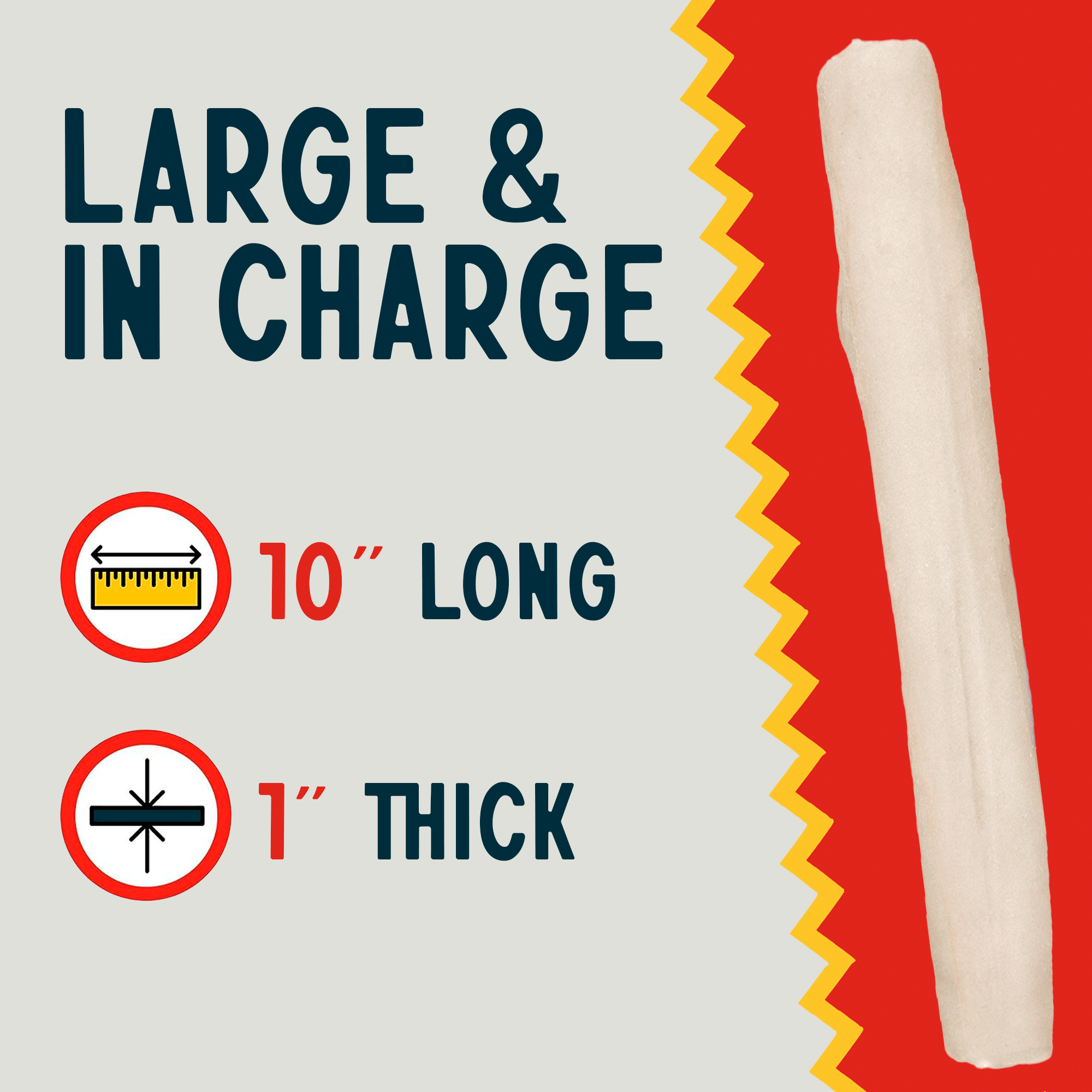
- Large dogs and aggressive chewers: our 10-11" Fresh Breath Dental Rolls add a fresh breath coating to an extra-thick roll.
- Medium and large dogs: the 8-9" beef and chicken flavored retriever rolls are designed as dental chews.
- Small dogs: 5" twist sticks give little mouths the same chewing benefit in a smaller size.
See all of our dental chews, and read our guide to rawhide safety for tips on safe chewing.
Keep it safe
Supervise chew time, keep water nearby, pick a chew that's the right size for your dog, and take away small leftover pieces. Chews support a dental routine, but they don't replace brushing or professional care.